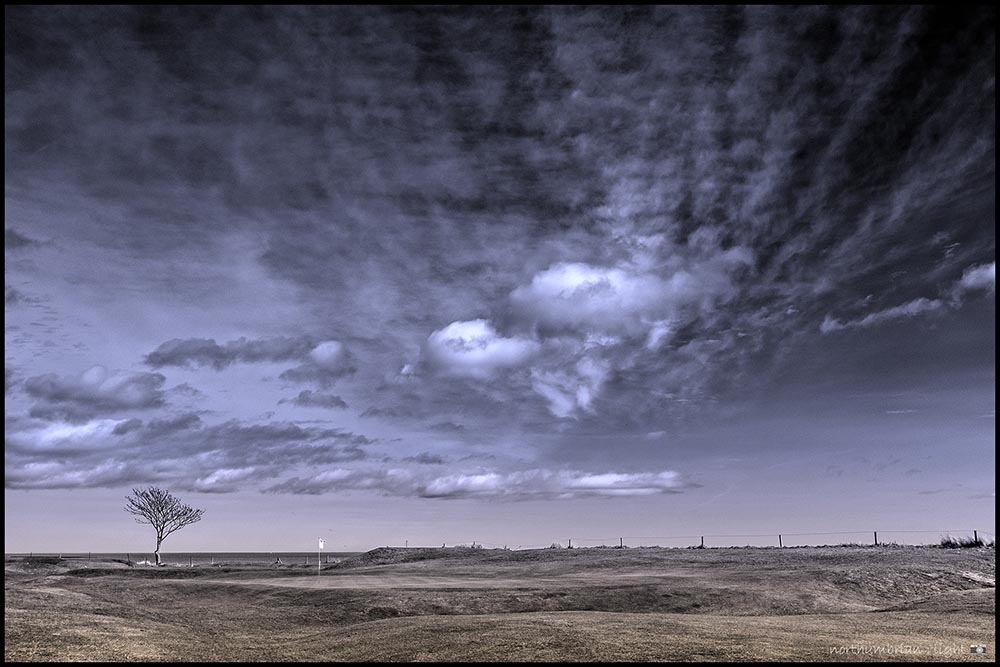
Sea Fret

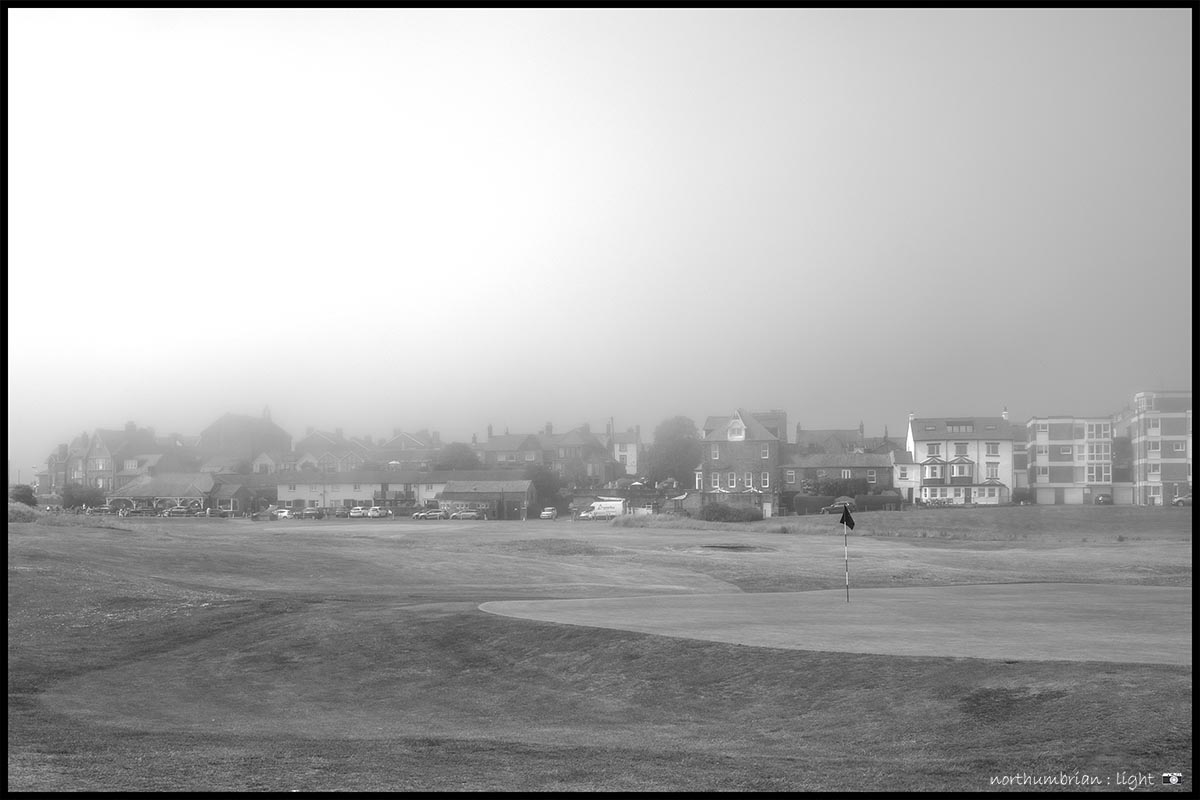
The mist that appears on the Monterey coast is an advection fog, formed when warm, moist air meets the cold ocean waters upwelling from the deep Monterey Submarine Canyon. In the summer months and early autumn, the coastline is bathed in a supernal mist which acts like a natural air conditioner. Pebble Beach holds onto the fog longer in forested and coastal areas, causing disruption to the Pebble Beach Golf Links: reduced visibility, altered ball distances as fog increases drag and delayed or cancelled tee times.
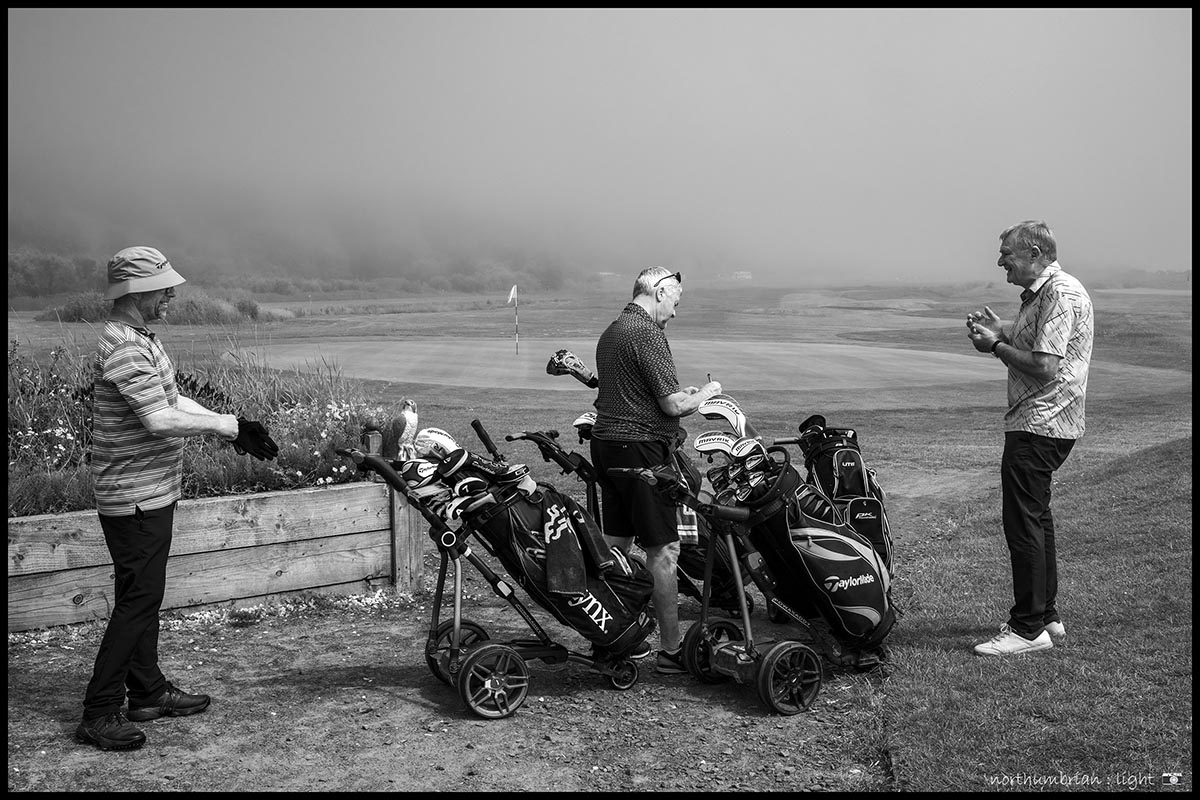
Exactly fifty years older than Pebble Beach, Alnmouth Village Golf Club, established in 1869, suffers the same problem, but much less often. The Northumberland land temperatures are rarely that warm, but on this late June day in 2026, for once, they were. There was even talk of closing the course until the sea fret disappeared but golfers kept teeing off regardless.
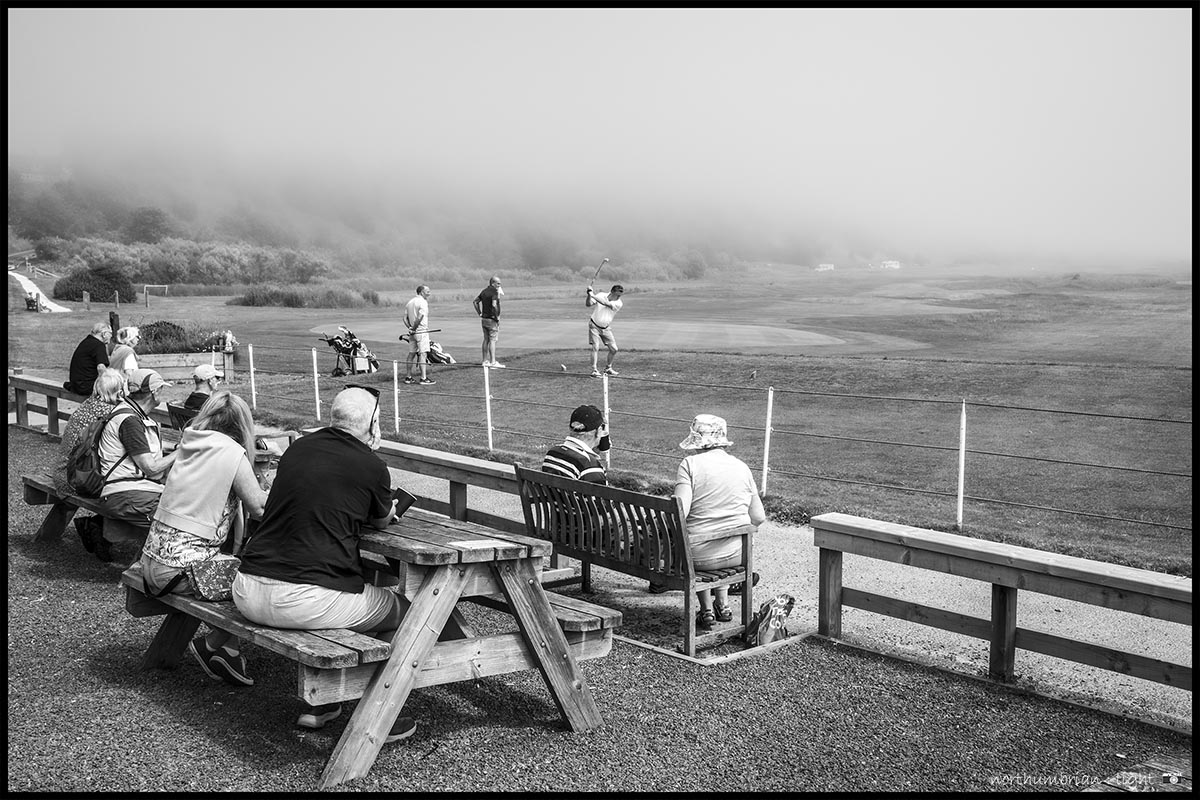
Exactly fifty years older than Pebble Beach, Alnmouth Village Golf Club, established in 1869, suffers the same problem, but much less often. The Northumberland land temperatures are rarely that warm, but on this late June day in 2026, for once, they were. There was even talk of closing the course until the sea fret disappeared but golfers kept teeing off regardless.

At the 6th, Alnmouth Village borders The Foxton’s 16th, a larger, full eighteen course and provides an opportunity for golfers to exchange greetings and retrieve stray drives from respective courses. I much prefer the shorter, true seaside links of the Village.

Alnmouth’s first five play flat along traditional links land, bordering the North Sea, with superbly maintained greens. At the 6th you are faced with a steep incline at odds with everything that has preceded. It is a challenging blind drive with a narrow window for success – a fraction too far left or right and there is deep rough. Too long and you are in rough again, if not out of bounds on the Foxton course. The fairway climbs yet more to an elevated green. It is the only hole I dislike, having never played it successfully. When I finally play it well, it will be elevated to a much loved and spectacular challenge. That day has not yet arrived. The reward for this climb, comes at the 7th tee, a glorious elevated drive some fifty feet above the fairway.
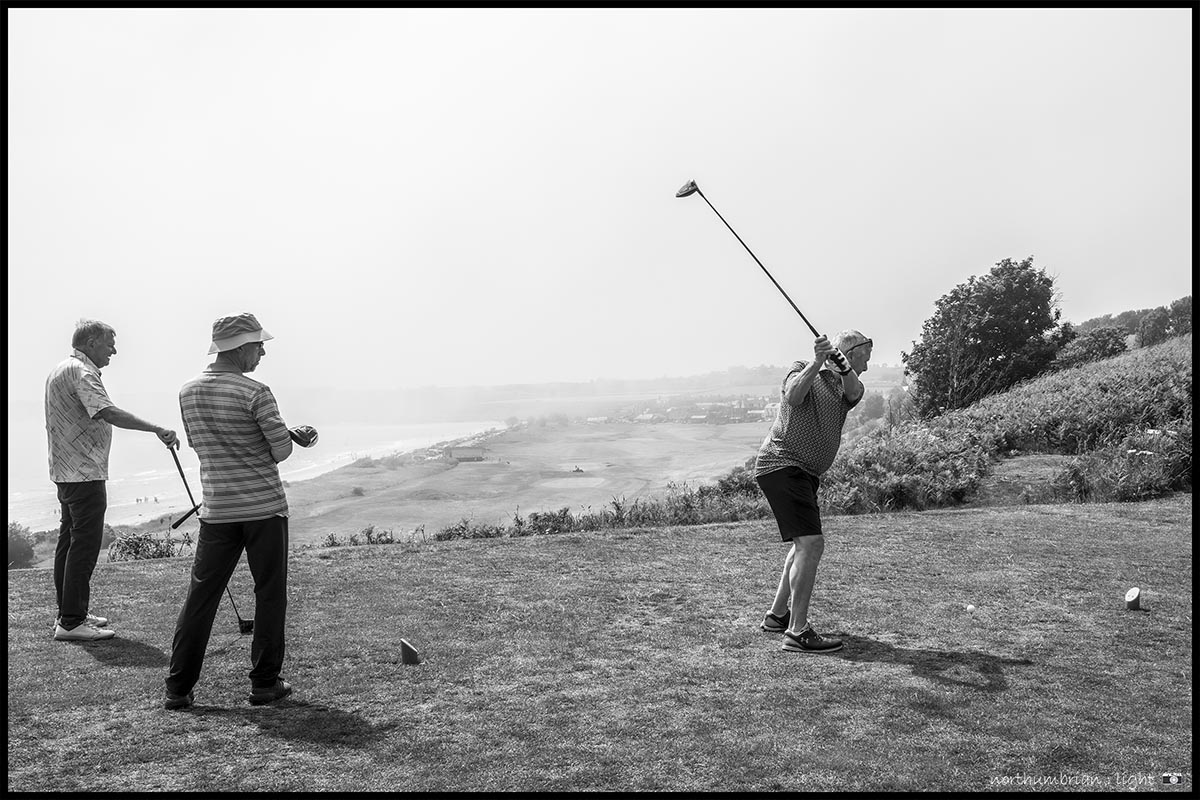
And therein lies the problem with the sea fret. Driving off the 7th tee in a mist, there is no way of knowing where your ball has gone, no idea what or who it might have struck. In addition, a beach car park access road dissects the 2nd and 8th fairways providing the added challenge of transient motor vehicles and pedestrians. This may all sound negative, but do not be deterred – Alnmouth Village Golf Club is a delight, as it has been for over 150 years.
Alnmouth Village Golf Course

The course, squeezed between Alnmouth’s main thoroughfare and the beach is a fine place to play the game and  claims  to be the oldest 9-hole links in England.    Established in 1869, it was designed by the famous Scottish golfer Mungo Park, winner of the 1874 Open Championship at Musselburgh.  The first five holes follow the shoreline before climbing up to the dogleg 6th – it is here, the course runs parallel with the Foxton’s par 5 16th, close enough to say hello to fellow golfers.  The proximity of the courses is more than an accident of geography. The story is told on the Foxton’s website:

In 1905 the course (Alnmouth Village) was extended to 18 holes to obviate a certain amount of undesirable overlapping which occurred on the nine hole course. The extension completed under the direction of Willie Park went northward towards Foxton with the distances between holes on the new course constructed very considerably and requiring sterling golf. The opening ceremony of the new course was performed by the Duke of Northumberland and was followed by a challenge match between the international champions Harry Vardon and J H Taylor.

In the late 1920’s the Duke of Northumberland was approached and consented to lease a further piece of land in order to make a new 18 hole course. A survey of the land was made by Mr HS Colt the famous golf architect and his report was published in the Newcastle Journal on the 4th July 1929. The land surrounded Foxton Hall, one of the historic residences of the Percy family, which was to be used as the clubhouse. The adoption of the Foxton Hall scheme was reported on the 10th December 1929 with the new club to come into being on the 1st January 1930. The new course where we are today, was opened on the 9 May 1931, but sadly the 8th Duke of Northumberland died suddenly in August and was therefore not present to witness his vision.

In 1936 Alnmouth Village Golf Club was formed and took over the running of the old links. Since that time the clubs have maintained their historical links and still play a number of special combined competitions.

From a magnificent high-level tee, with a view that encompasses the full length of Alnmouth Bay, Coquet Island and beyond, the 7th returns the golfer to the sea-bound links, a descent of some 50+ feet.  The ball stays air-bound for an eternity as it eventually plunges earthwards adjacent to the third green bunkers or beyond – an immensely satisfying drive!

A nine-hole course with such a fine location and history, it seems inconceivable that it will not find its way into the pages of Golf in the Wild, Going Home.  It is just a matter of a small diversion as the reader is led back to Allendale.

The view near the 4th tee

The view near the 4th tee

Approaching the 5th

Approaching the 5th

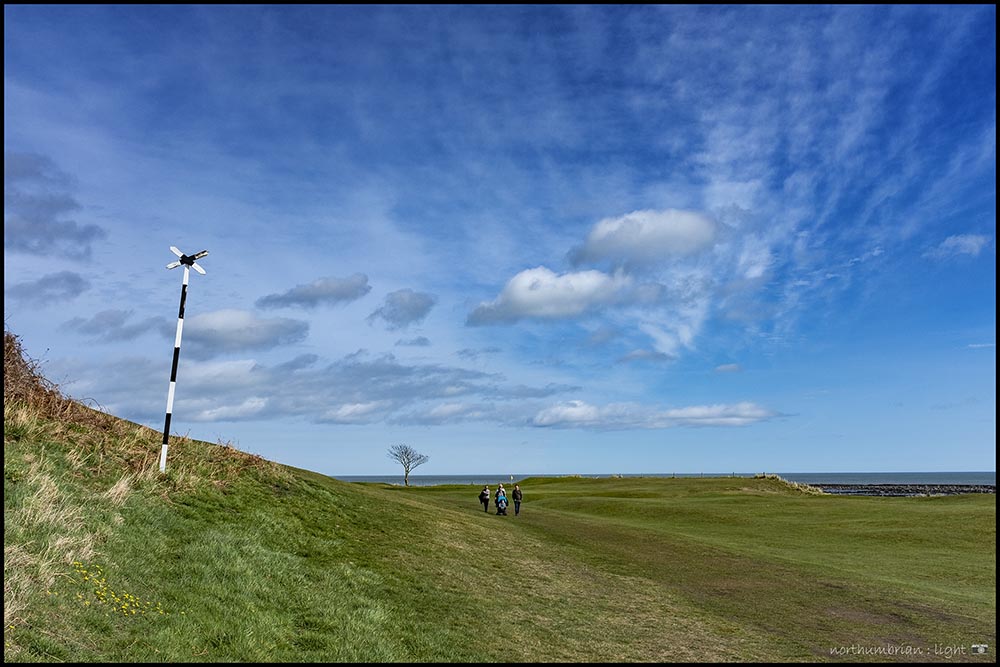
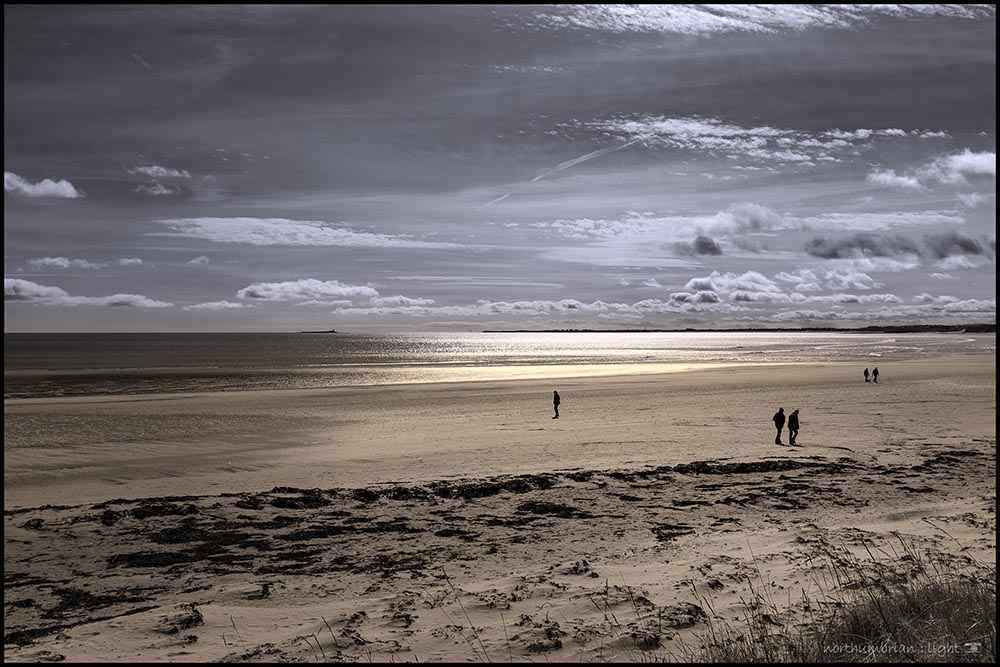
Brave walkers!

Brave walkers!